Stain of Salty Water
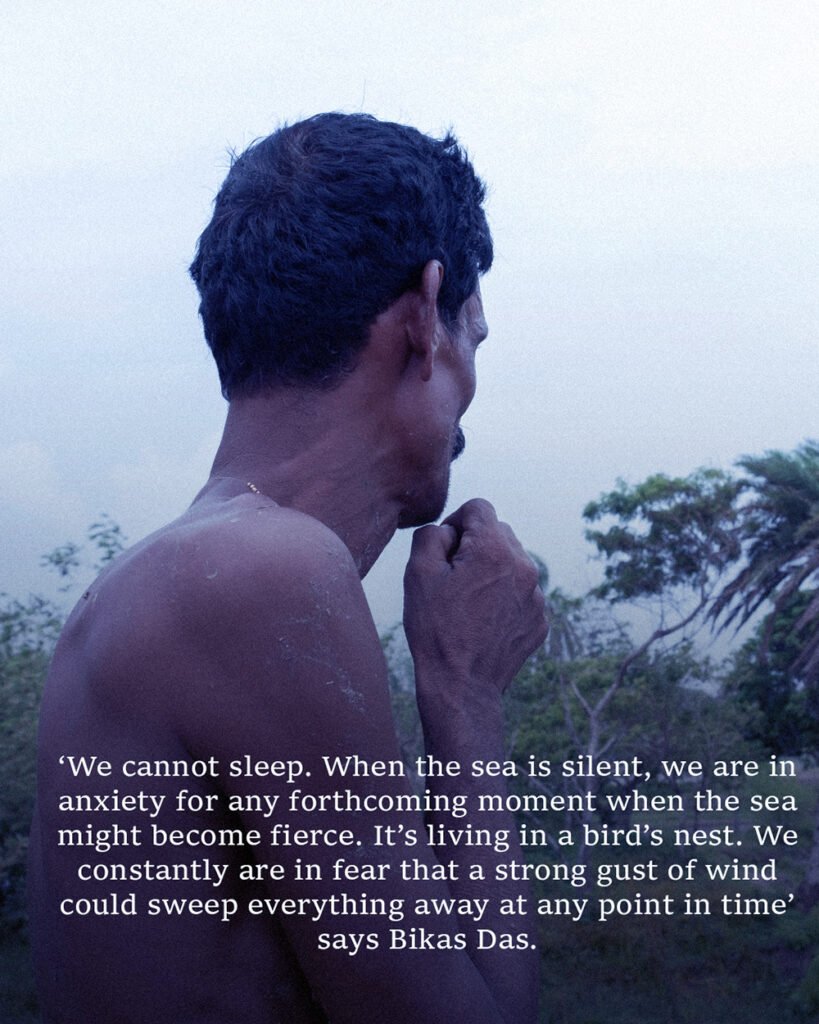
“’We cannot sleep. When the sea is silent, we are in anxiety for any forthcoming moment when the sea might become fierce. It’s living in a bird’s nest. We constantly are in fear that a strong gust of wind could sweep everything away at any point in time’ says Bikas Das.,” said Bikash Das, a resident of Sagar Island.
Shankar Bera from Mahishamari, Sagar Island, said, “Every night, when the rest of my family sleeps, I stay awake. The ticking of the clock feels like it’s beating inside my chest. When the tide rises at night, I leave my home in fear and go up to the embankment to see if it’s still holding. It’s a strange kind of suffering.”

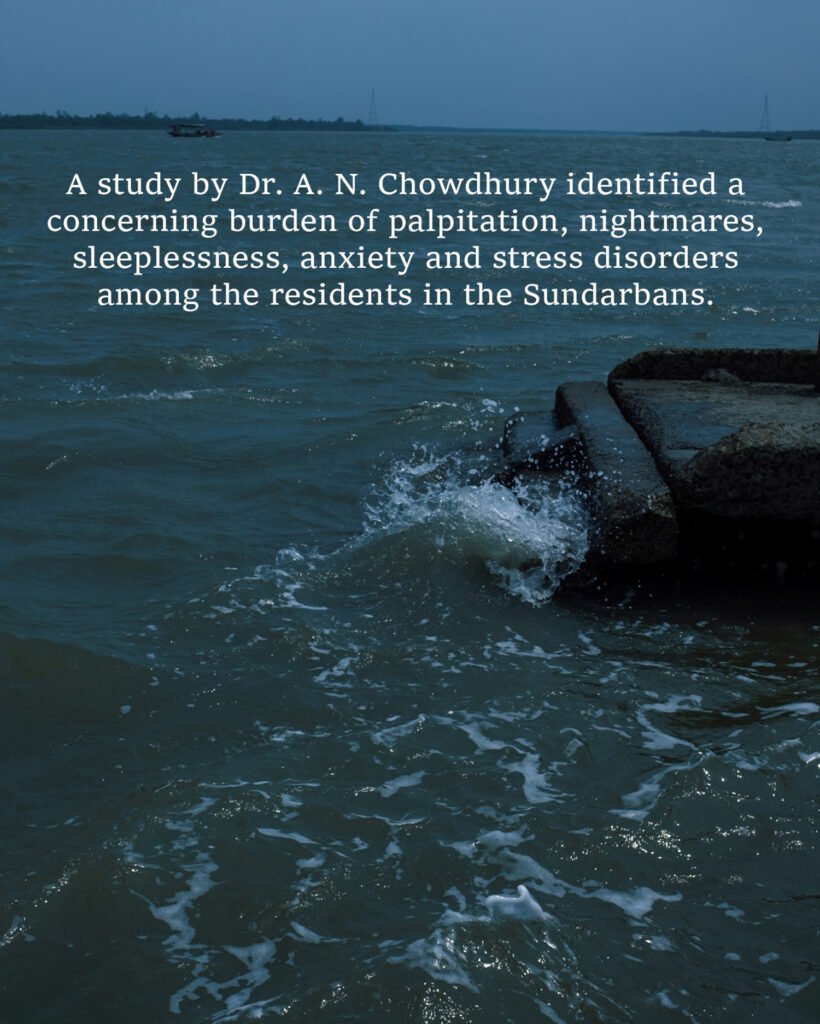
A study conducted between 1998-2005 household survey on mental and physical health in the Sundarbans, carried out by a team of health professionals led by Dr. Arabinda Narayan Chowdhury affiliated to Northamptonshire Healthcare NHS Foundation Trust identified a concerning burden of palpitation, nightmares, sleeplessness, anxiety and stress disorders among the residents. The research was conducted in Gosaba aimed to evaluate the health impacts of loss of home and agricultural land and food security among others. Another study led by Dr. Jayati Chourey focused on the relationship between exposure to saline water and women’s health, including mental health. Four hundred women in Chandipur, Hetalbari, Mahendra Nagar and Dubbachati who were engaged in shrimp catching were interviewed for the study. Disruptions to the menstrual cycle were found to be a recurring theme.

“Sagar Island is more valuable…as a break water to save the mainland from the full destructive forces of storm waves than a precarious field of agriculture.”
— R.B. Chapman, Divisional Commissioner of Sundarbans under the East India Company (1869 )
Despite Chapman’s observations, 5366 km of the former tidal wetlands were converted to rice farms in the South and North 24-Parganas. Clare Lizamit Samling’s Assistant Professor, School of Sociology, Calcutta University, in her PhD thesis ‘Being Displaced: Livelihood and Settlement in the Indian Sundarbans’ unfolds a history of the Sundarbans in which the Sagar Islands played an important role under colonialism in the hands of East Indian Company. Acres of wetlands were converted to farmlands and an agrarian economy was constructed by cutting down of forests and clearing out mangroves. Post-Permanent settlement, farmers had to farm no matter what the condition of the fields were as a new method of paying fixed ‘kor (tax) every year was introduced under the regime of East India Company.
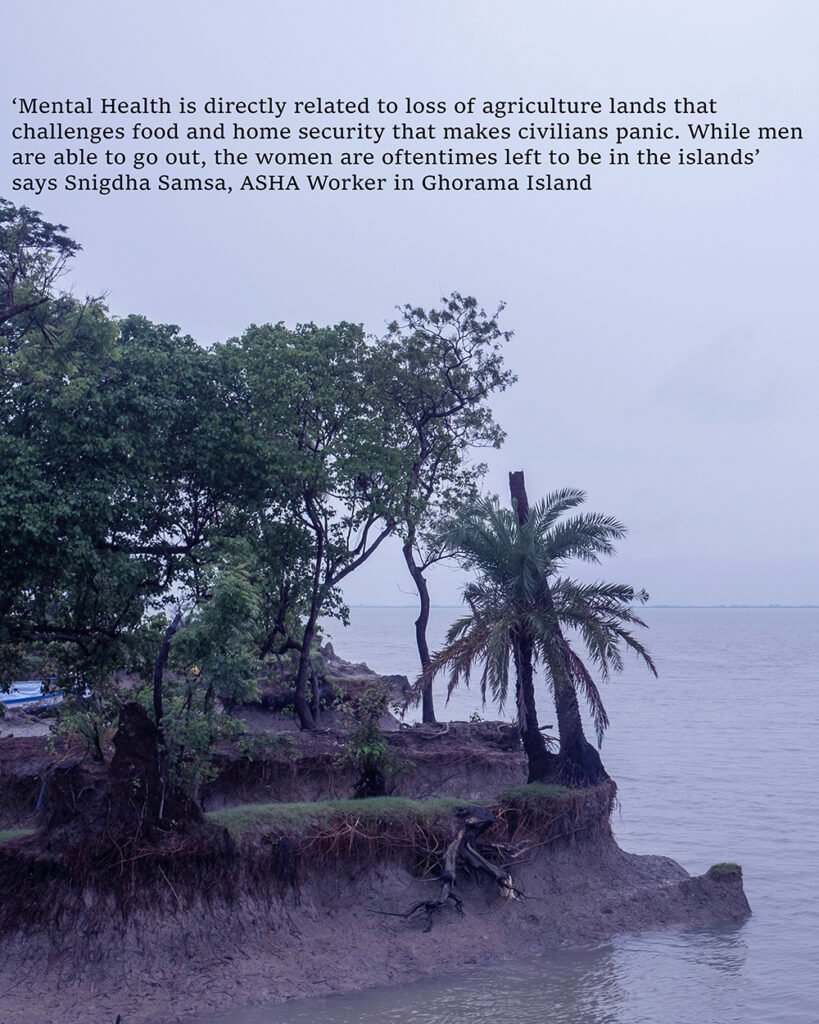
The effects of climate change in the Sundarbans are not limited to the loss of farmlands or homes — it also lives strangely within people’s minds and stays for a long time. In scientific terms, this condition is called Solastalgia — an unbearable anxiety that arises when one’s surroundings change so drastically that one no longer feels at home in their own home. In other words, the loss is not only economic; it is deeply psychological.
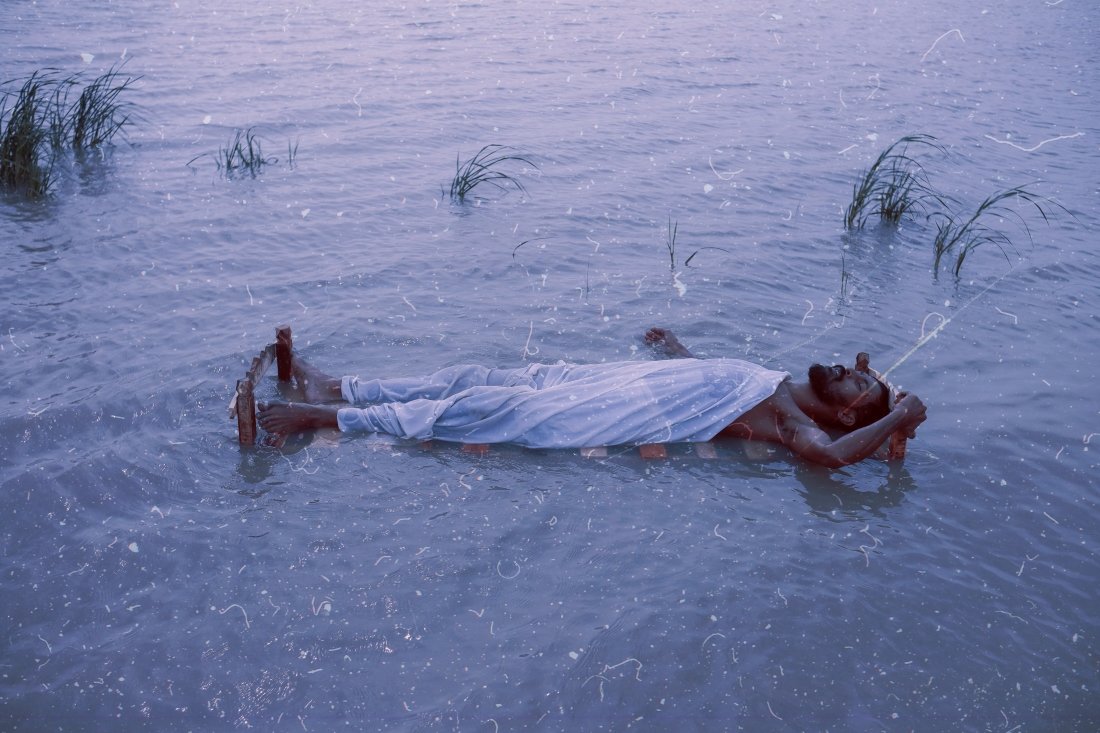
Text: Siddhanta Goswami ¦ Performance: Koushiki Jana
Publication: Inscript.me, The Wall
The Project is supported by Earth Journalism Network